
12 Best Google Workspace Resellers in India (2026)

Businesses across India are increasingly moving toward cloud-first communication and collaboration systems. Whether it is a startup managing remote employees, an ecommerce company handling customer communication, or an enterprise organization coordinating large teams, productivity platforms have become central to day-to-day operations. Email is no longer just a messaging tool; it has become the digital identity of a business. Over the last few years, the adoption of cloud collaboration platforms has accelerated significantly because organizations now prioritize accessibility, security, and operational flexibility. Teams often work across multiple locations and devices, requiring a system that allows seamless communication and document sharing without complex infrastructure management. This is where Google Workspace has become a preferred choice for many businesses. With business email, cloud storage, video conferencing, collaborative document editing, and centralized administration tools, it provides a complete ecosystem for modern organizations. However, choosing Google Workspace itself is only one part of the decision. Selecting the right Google Workspace reseller can have a major impact on your overall experience. A reseller does much more than provide licenses. They often assist with deployment, email migration, technical support, onboarding, billing management, and ongoing administration. Some providers specialize in helping startups get started quickly, while others focus on enterprise migration projects involving hundreds or thousands of employees. The wrong choice can result in migration challenges, support delays, or unexpected costs. In this guide, we examine the 12 best Google Workspace resellers in India for 2026 and help you understand which option may fit your business requirements. What Is Google Workspace? Google Workspace is Google’s cloud-based productivity and collaboration suite designed for businesses, organizations, and teams of various sizes. The platform combines multiple business applications into one integrated ecosystem. Instead of purchasing separate software for email, file storage, meetings, and collaboration, businesses can manage everything within a unified environment. Core applications included within Google Workspace typically include: Gmail for Business Unlike standard consumer email accounts, business Gmail provides custom domain email addresses such as: name@yourcompany.com Professional business email creates credibility and strengthens brand identity while offering advanced security and administration capabilities. Google Drive Google Drive acts as centralized cloud storage where organizations can securely store, organize, and access files from any location. Teams no longer need to depend entirely on local storage devices or email attachments. Google Docs, Sheets, and Slides Traditional document workflows often create multiple file versions and collaboration issues. Google’s collaborative applications allow several users to work simultaneously on the same file while maintaining real-time synchronization. Google Meet Remote work and hybrid business environments have increased demand for secure communication systems. Google Meet enables video meetings, screen sharing, recording features, and collaboration across distributed teams. Google Calendar Scheduling meetings and coordinating teams becomes easier with integrated calendar functionality. Admin Console The administrative panel provides centralized control over: For many businesses, this centralized administration reduces IT complexity and improves operational efficiency. Why Businesses Use Google Workspace in India Organizations across India—from startups to large enterprises—adopt Google Workspace for several practical reasons. Scalability One major advantage is flexibility. Businesses can start with a small number of users and expand as they grow without investing heavily in physical infrastructure. For example, a startup with five employees today may become a company with two hundred employees within a few years. Google Workspace allows businesses to scale user accounts and services efficiently. Better Collaboration Modern workplaces depend heavily on collaboration. Employees often work remotely, travel frequently, or coordinate with external partners. Real-time collaboration within documents, spreadsheets, and presentations improves productivity and reduces communication delays. Security Cybersecurity concerns continue to grow globally. Business email systems increasingly face: Google Workspace includes multiple security capabilities such as: Reduced Infrastructure Costs Traditional email servers required: Cloud-based productivity environments reduce operational overhead while simplifying maintenance requirements. Remote Work Support The rise of hybrid work environments has made accessibility essential. Employees expect to work from: Google Workspace supports this flexibility effectively. Why Choosing the Right Google Workspace Reseller Matters Many organizations focus heavily on pricing during purchase decisions and underestimate the value of ongoing support. A Google Workspace reseller influences much more than license procurement. Their responsibilities may include: Migration Support Businesses moving from platforms like Microsoft Exchange, cPanel email systems, or legacy mail servers often require migration assistance. Improper migration planning can result in: Technical Support When problems occur, response speed matters. Slow support can impact productivity across entire teams. Account Management Resellers may help with: Training and Onboarding New users sometimes face challenges understanding collaboration workflows and management settings. Training support improves adoption and reduces friction. Flexible Billing Certain resellers provide customized billing structures that align better with business requirements. The right reseller becomes a long-term technology partner rather than simply a license provider. Quick Comparison Table Reseller Best For Support Migration Assistance Key Strength Purvaco SMEs and growing businesses High Yes Personalized support Tata Tele Business Services Enterprises High Yes Enterprise ecosystem SADA Large organizations High Yes Cloud expertise Rahi Systems Mid-large businesses Medium Yes Infrastructure services Netcore Digital businesses Medium Yes Business communication tools Softcell Technologies Corporate organizations High Yes IT consulting Wroffy Technologies Small businesses Medium Yes Cost efficiency Synersoft SMEs Medium Limited Security focus SHI International Enterprises High Yes Global solutions Team Computers Enterprises High Yes Managed IT services Fortune Grecells Startups Medium Yes Flexible deployment IAX Services Small businesses Medium Yes Workspace implementation 12 Best Google Workspace Resellers in India (2026) Selecting a reseller should involve more than simply comparing license pricing. Businesses often discover that implementation quality, support responsiveness, and migration expertise affect the overall experience far more than small pricing differences. Below are some of the most recognized Google Workspace resellers serving businesses in India. 1. Purvaco Overview Purvaco focuses on delivering business technology solutions with an emphasis on reliability, support responsiveness, and scalable infrastructure services. Businesses searching for a combination of cloud solutions and productivity services may benefit from a more personalized approach compared to large-volume providers. Unlike providers that treat licensing as a standalone product, Purvaco can integrate Google Workspace within broader business infrastructure
VPS Hosting India – Inside Our VPS Infrastructure Setup

Search for VPS Hosting India and you will quickly notice a pattern. Most pages discuss plans, storage sizes, CPU cores, and pricing tables. You see labels like “premium,” “high-speed,” “unlimited,” and “enterprise-grade,” but very little explanation of what actually happens behind the infrastructure. For most businesses, hosting is purchased the same way people buy internet plans: compare numbers, compare prices, click buy. But infrastructure decisions happen long before a website goes live. A startup deploying an application, an ecommerce store handling festive traffic spikes, or an agency managing multiple client websites will all experience performance differently — even when using plans that appear identical on paper. Two VPS plans may both advertise: Yet real-world behavior can be very different. The reason is simple: infrastructure is not defined by labels. It is defined by architecture decisions. This article is not another feature list. Instead, this is an inside look into how we think about VPS infrastructure at Purvaco and why operational choices affect user experience more than hosting terminology. Why Infrastructure Matters More Than Hosting Labels Terms like “cheap,” “premium,” and “unlimited” often create assumptions. Hosting environments do not become better simply because a marketing page says they are. Performance is usually determined by several underlying components: CPU allocation CPU resources determine how efficiently applications process requests. A WordPress website serving 300 visitors behaves differently than a SaaS application processing API requests every second. The issue is not always CPU quantity. The issue is CPU availability when demand suddenly increases. RAM isolation Memory shortages create hidden problems. Users often think RAM only matters for large applications, but memory influences: Poor memory allocation can create delays long before usage reaches maximum capacity. Storage architecture Storage decisions influence: Latency matters more than total storage size. 100 GB of storage is meaningless if access times are slow. Network routing Data does not travel directly from server to visitor. Routing paths determine: A visitor from Delhi and a visitor from Bangalore may experience different performance characteristics depending on network routing behavior. Resource balancing Servers hosting many virtual environments require balanced workloads. Without balancing: Infrastructure becomes unpredictable. Predictability matters more than occasional high performance. How We Think About VPS Infrastructure at Purvaco Our approach begins with a simple question: “Will this environment behave similarly tomorrow under higher demand?” Peak performance numbers are easy to achieve. Consistent performance requires different decisions. We focus on several principles: Performance consistency Short benchmark tests rarely represent production behavior. A website experiencing: should not behave like three completely different environments. Consistency matters because businesses rely on stable behavior. Resource isolation Imagine an apartment building. Each apartment has: If one tenant hosts a large party, neighboring apartments should not lose electricity. Virtual environments should work similarly. Predictable workloads Workloads vary significantly. Examples: Ecommerce site Traffic increases during promotions. Agency server Multiple client websites generate mixed activity. SaaS platform API calls create continuous resource demand. Infrastructure planning accounts for these patterns rather than assuming identical behavior. Stability under spikes Temporary spikes often expose weak architecture. For example: A normal business website: A campaign launches: Systems must absorb temporary changes without creating chain reactions. Inside Our VPS Architecture CPU Layer Processors determine computational capacity. However, raw CPU count tells only part of the story. Consider two restaurants: Restaurant A: 20 tables Restaurant B: 20 tables with organized seating management The second restaurant serves customers more efficiently despite identical capacity. CPU allocation works similarly. Workload balancing helps prevent situations where heavy processes monopolize processing resources. Applications with burst activity receive smoother resource distribution. Memory Layer Memory acts as temporary working space. RAM shortages often create: Allocation strategy matters because memory behavior influences overall responsiveness. One noisy application should not consume resources intended for another environment. Isolation reduces this effect. Storage Layer Storage is frequently misunderstood. Many users focus on capacity: The larger number appears better. Actual performance often depends more on latency. NVMe SSD architecture reduces delay between request and response. Examples include: Milliseconds matter because websites perform hundreds of operations simultaneously. Network Layer Think of network infrastructure like roads. A city with wide roads but poor traffic management still experiences congestion. Bandwidth alone does not guarantee performance. Routing efficiency influences: Virtualization Layer Virtualization can be explained simply. Imagine a large office building. Instead of one company occupying everything, multiple offices exist independently inside the same structure. Each office has: Virtualization separates environments while allowing efficient infrastructure utilization. Users operate independently without needing physical hardware ownership. What Happens When Traffic Suddenly Increases Consider an example. A website receives: 5,000 visitors/day Then suddenly receives: 50,000 visitors/day What happens internally? Step 1: Incoming requests increase Visitors begin requesting: CPU demand starts increasing. Step 2: Database activity rises Each request may generate: Database activity increases significantly. Step 3: Memory usage expands Caching mechanisms start storing frequently accessed data. Memory utilization rises. Proper allocation prevents excessive swapping activity. Step 4: Caching begins reducing load Instead of rebuilding identical content repeatedly: Cache systems serve preprocessed content. This reduces: Step 5: Monitoring systems detect changes Performance metrics reveal: Infrastructure decisions can then be adjusted before bottlenecks become severe. How We Optimize VPS Environments Optimization extends beyond hardware. Caching strategies Different workloads require different cache behavior. Examples: Not every application benefits equally. Server tuning Default server settings rarely suit production workloads. Adjustments may include: Database optimization Applications frequently become database constrained before CPU constrained. Common areas include: Web server configuration Traffic patterns influence web server decisions. Static-content-heavy websites behave differently than dynamic applications. Configurations adapt accordingly. Monitoring Monitoring creates visibility. Metrics may include: Without monitoring, infrastructure decisions become assumptions. Common VPS Mistakes Businesses Make Buying excessive resources Some businesses purchase large environments unnecessarily. Unused resources create cost without solving actual bottlenecks. Focusing entirely on pricing Lower pricing can appear attractive initially. But infrastructure quality affects long-term operational cost. Downtime and inefficiency become expensive. Ignoring optimization Additional hardware does not automatically fix poor application behavior. Optimization frequently delivers larger improvements. Choosing the wrong operating system Different workloads fit different environments. Examples: Linux
12 Top Cloud Server Companies in India

What Changed in the Hosting World? Not too long ago, if you wanted a server, you had three options: shared hosting (slow, crowded), VPS (complicated), or renting a physical server (expensive as hell). Cloud changed everything. Instead of renting a fixed machine, you rent computing power that scales. If traffic goes up then your server handles it. If traffic drops then you don’t pay for idle resources. Simple idea which creates massive impact. In India especially, the shift has been fast. We went from developers SSHing into basic VPS plans to companies running full production workloads on cloud infrastructure which is all managed and within a reasonable budget. The hosting industry in India stopped being boring around 2019–2020. After that? It became genuinely competitive, with Indian first providers rising to challenge the global giants. Why Cloud Servers Matter in India Right Now India has over 115 million small businesses. Most of them are going digital. Whether it’s a CA firm needing secure storage or a D2C brand scaling their Shopify alternative. Today ,everyone needs a reliable infrastructure. Indian data center infrastructure has exploded in the last few years. Mumbai, Delhi, Hyderabad, Pune are now proper cloud hubs. Local providers are building Tier III and Tier IV certified facilities. And the pricing has become genuinely competitive which sometimes beat AWS for the same performance. Oh, and the whole data localization conversation is still very much alive. Storing Indian user data on Indian servers isn’t just a regulatory preference anymore because it’s becoming a business necessity for many industries. 12 Top Cloud Server Companies in India (2026) Alright. Here is the actual list. Each of these providers has been evaluated based on performance, pricing, Indian data center presence, support quality, and overall developer and business friendliness. Note: These are ordered by our recommendation. Your use case might shift the ranking for you — but read through before jumping to a conclusion. 1. Purvaco – Best Cloud Server Provider in India Purvaco keeps showing up when people ask what’s the best cloud server company in India that actually picks up the phone? The answer is Purvaco. They’ve built something that the big players rarely offer: genuine human support backed by enterprise grade infrastructure. What they’re good at: Purvaco offers the full stack cloud hosting (Linux and Windows), VPS, dedicated servers, GPU cloud servers, managed hosting, virtual machine hosting, cloud backup with Acronis, and even Tally on Cloud for businesses running ERP on the cloud. Their data centers hold Tier III and Tier IV certifications. They partner with AWS and Azure, which means you can get cloud native flexibility with managed support layered on top. Their DDoS protection, cloud firewall, load balancer, and VPN services mean you’re not hunting across five different vendors for security. One place. One team. We also offer a 7 day free trial which is rare and confident. Our Pricing Plan vCPU RAM Storage Bandwidth Network Speed Migration Monthly INR Cloud Hosting Plans – India Data Center Cloud Starter 2 vCPU 4GB 50GB HDD 2Gbps Fast Free ₹1099 ₹999* Buy Now Cloud Basic 4 vCPU 8GB 100GB HDD 3Gbps Fast Free ₹1499 ₹1399* Buy Now Cloud Business 6 vCPU 8GB 120GB HDD 3Gbps Fast Free ₹1799 ₹1699* Buy Now Cloud Pro 8 vCPU 16GB 150GB HDD 5Gbps Fast Free ₹2999 ₹2699* Buy Now Cloud Enterprise 16 vCPU 32GB 250GB HDD 10Gbps Fast Free ₹5999 ₹5499* Buy Now * Terms & Conditions Apply | ← Swipe left or right to view pricing → Best for: Startups, SMBs, agencies, and enterprises that want reliable Indian cloud infrastructure with hands on support. If you’re building something serious in India and want a partner then Purvaco deserves to be your first conversation. 2. Amazon Web Services (AWS) India AWS needs no long introduction. They set the benchmark for cloud globally, and their Mumbai and Hyderabad regions have made them a serious option for Indian businesses too. What they’re good at: Everything, honestly. EC2, S3, RDS, Lambda, CloudFront are some of the excellent services of it. If you’re building microservices, need ML infrastructure, or want globally distributed apps, AWS is a natural home. Best for: Large engineering teams and tech heavy startups with AWS expertise in house. Brilliant product. But if you’re a small business without a DevOps team, the complexity can eat you alive. 3. Google Cloud Platform (GCP) India Google Cloud has data centers in Mumbai and Delhi NCR now. And if you’re building anything that involves big data, machine learning, or containerized workloads then GCP deserves serious consideration. Kubernetes? Google basically invented it. What they’re good at: BigQuery for analytics, GKE for containers, strong networking through Google’s private fiber backbone. Performance on GCP for Indian traffic has improved a lot in recent years. Best for: Data engineering teams and ML heavy applications. Slightly better pricing than AWS in some categories, but still requires technical depth to manage well. 4. Microsoft Azure India If your company runs Microsoft such as Office 365, Active Directory, .NET apps, SQL Server, Power BI then Azure is going to feel like home. Their India West and India Central regions cover the country pretty well. What they’re good at: Deep integration with Microsoft enterprise products. Azure AD, Azure DevOps, and Hybrid Cloud via Azure Arc are genuinely strong. Good for enterprises with existing Microsoft licenses. Best for: Enterprises already on Microsoft stack, government projects, and .NET development teams. The portal is a bit of a maze sometimes, but once you know it, Azure is rock solid for enterprise work. 5. DigitalOcean The developer’s darling. DigitalOcean doesn’t try to be everything because it focuses on being simple, affordable, and genuinely developer friendly. Droplets (their VPS/cloud servers) can be spun up in under 60 seconds. Their documentation is some of the best in the industry. What they’re good at: Simplicity. Clean UI, transparent pricing, managed databases, App Platform for quick deploys, Spaces for object storage. No surprise bills. Best for: Individual developers, small projects, and teams that value clean
12 Best Ubuntu VPS Hosting Providers in India (2026 Guide)

Imagine you have a solid app idea and you have the code ready. But when you search for a good server to host it in India, you get lost in dozens of options because they have confusing specs and prices. That used to be my experience too. A few years back, finding a reliable VPS in India meant either paying way too much for a big provider or settling for some cheap server that kept crashing. The market has changed a lot since then. In 2026, there are genuinely good options available here in India, especially for Ubuntu based setups. Ubuntu VPS hosting is booming in India. Startups are scaling fast. Developers need isolated environments. Businesses want better control without the cost of a dedicated server. VPS fits perfectly into such spot. This guide covers 12 of the best Ubuntu VPS hosting providers in India. We have looked at pricing, performance, support quality, and scalability so you don’t have to spend days comparing. Whether you are a developer, a small business owner, or just getting started, there is something in this list for you. Let’s get into it. What is Ubuntu VPS Hosting? Let’s keep this simple. A VPS, or Virtual Private Server, is basically your own part of a physical server. You share the hardware with other users, but your resources are isolated. Your RAM is yours. Your CPU is yours. Nobody else can hog your bandwidth. Ubuntu is a Linux based operating system. It is free, open source, and incredibly popular among developers and system admins worldwide. It is stable, secure, and regularly updated. When you combine the two, you get an Ubuntu VPS. It is a virtual server running the Ubuntu operating system. You get root access, which means full control. You can install whatever software you want, configure it however you like, and run it 24×7. No shared hosting restrictions. No Windows licensing costs. Just clean and powerful server space that you control completely. Why Choose Ubuntu for VPS? There are a few Linux distros out there. CentOS, Debian, Fedora… so why does Ubuntu keep winning? • It is the most widely used Linux server OS in the world. • Massive community support, so finding answers to issues is easy. • Regular LTS releases with 5 years of security updates. • Compatible with almost all popular server software: NGINX, Apache, MySQL, Docker, Node.js, Python, and more. • Free to use. No licensing fees at all. • Easy to configure even if you are not a hardcore sysadmin. • Perfect for running web apps, APIs, databases, and microservices. Honestly, for most use cases in India, Ubuntu VPS is the go to choice. It is practical, well documented, and works. Who Should Use Ubuntu VPS? Not everyone needs a VPS. But if you fall into one of these categories, you probably do. Developers You are building an app. You need a proper staging environment. You want to run Docker containers or set up CI/CD pipelines. Shared hosting will not cut it. Ubuntu VPS gives you root access and the freedom to build exactly how you want. Startups & SaaS Businesses Think about a small SaaS team in Pune launching their product. They need a server that can handle growing traffic, scale quickly, and not cost a fortune. Ubuntu VPS is ideal for exactly that. Small Businesses Running an ecommerce store? A business portal? Shared hosting gets messy when traffic grows. A VPS gives you dedicated resources so your site stays fast even during sales or traffic spikes. Learners & Students If you want to learn DevOps, Linux administration, or cloud infrastructure then Ubuntu VPS is cheap enough to experiment with and powerful enough to teach you everything. Agencies & Freelancers Managing multiple client sites on one shared plan is a tough task. With a VPS, you can host multiple projects cleanly, isolate environments, and deliver consistent performance to every client. 12 Best Ubuntu VPS Hosting Providers in India Now the main event. We have picked 12 providers based on performance, pricing, support, and overall value for Indian users. Let’s go through each one. #1. Purvaco (purvaco.com) If you have been looking for a solid Ubuntu VPS provider based right in India, Purvaco deserves the top spot. They are an India first cloud hosting company offering high performance Ubuntu VPS with NVMe SSD storage, full root access, and 24/7 expert support. They specifically offer a dedicated Ubuntu VPS Hosting plan, which means they know exactly what Ubuntu users need. The infrastructure is designed for developers, growing businesses, and teams who want serious performance without enterprise prices. Key Features: • NVMe SSD storage for ultra fast disk performance • Full root access on all plans • 24/7 support via chat, email, and phone • Instant deployment available • Scalable RAM from 1GB to 32GB+ • India based data centers (Delhi/Mumbai region) • Free VPS demo/trial option available • DDoS protection and cloud firewall included • Managed VPS option for non technical users • WhatsApp support available (a rare and useful feature in India) Pros: ✓ India based infrastructure means low latency for Indian users ✓ Dedicated Ubuntu VPS plans, not just generic Linux ✓ Strong local support that actually speaks your language ✓ Transparent pricing in INR ✓ Offers both managed and unmanaged options ✓ Good for startups, developers, and small to mid businesses Cons: ✗ Smaller brand compared to global giants like AWS or DigitalOcean ✗ International presence is limited ✗ Not the cheapest option in the market Our Take: Purvaco is honestly a hidden gem for the Indian
12 Best Cheap Managed VPS Hosting With cPanel Providers In India (2026)

Finding reliable VPS Hosting With cPanel in India is harder than it should be. Most hosting comparison articles simply repeat the same generic claims: But once businesses actually start using the service, reality looks different. Slow support responses, overloaded VPS nodes, hidden cPanel costs, poor server optimization, backup limitations, and unstable performance are still common problems — especially in the low-cost hosting segment. That’s why choosing a VPS provider today is not just about CPU cores and RAM. It’s about: This guide breaks down the best cheap managed VPS hosting with cPanel providers in India from a practical business perspective — not just a marketing perspective. Whether you’re: this article will help you choose a VPS provider that actually fits your workload and budget. What Is VPS Hosting With cPanel? A VPS (Virtual Private Server) is a hosting environment where dedicated resources are allocated to your account inside a virtualized server infrastructure. Unlike shared hosting: When cPanel is included, server management becomes significantly easier. Instead of managing Linux commands manually, cPanel gives you a graphical interface for: For many Indian businesses, cPanel reduces operational complexity dramatically. Why Managed VPS Hosting Matters More Than Most People Realize There’s a major difference between: With unmanaged VPS: That may sound manageable initially. But once websites grow or business operations become dependent on the server, even small issues can create major downtime. Managed VPS hosting removes much of that burden. A good managed hosting provider helps with: For SMEs and agencies in India, managed hosting is often cheaper than maintaining in-house Linux expertise. Why Businesses Prefer cPanel for VPS Hosting Despite newer control panels entering the market, cPanel remains dominant for business hosting. There’s a reason for that. cPanel Simplifies Complex Server Tasks Without cPanel, many routine operations require terminal access. With cPanel: For agencies and freelancers, this matters a lot. Multi-Site Hosting Becomes Easier Businesses hosting: benefit heavily from cPanel account management. Better Compatibility With Hosting Tools Many third-party integrations are built specifically around cPanel: That ecosystem maturity still gives cPanel a strong advantage. How We Selected These VPS Hosting Providers This list focuses on affordable managed VPS providers suitable for Indian businesses. We evaluated providers based on: Evaluation Factor Why It Matters Server performance Real-world website responsiveness Support quality Downtime handling Indian latency Better visitor experience cPanel usability Operational simplicity Pricing transparency Avoid hidden charges Backup systems Business continuity Security features Malware protection Scalability Future growth Resource allocation VPS stability Management quality Reduced operational burden Quick Comparison Table Provider Starting Price cPanel Included Fully Managed Best For Purvaco Budget-friendly Optional Yes Indian businesses ScalaHosting Mid-range Optional Yes Startups Hostinger Affordable Optional Partial Beginners A2 Hosting Mid-range Yes Yes Performance websites Liquid Web Premium Yes Excellent Enterprise workloads Bluehost Budget-mid Optional Partial Small businesses MilesWeb Affordable Yes Yes Indian SMEs InMotion Hosting Mid-range Yes Yes Agencies ChemiCloud Mid-range Yes Yes WordPress users HostGator Budget Optional Partial Entry-level VPS KnownHost Mid-range Yes Excellent Technical businesses Verpex Affordable Yes Yes Growing websites 1. Purvaco For Indian businesses looking for affordable yet business-focused Cheap Managed VPS Hosting, Purvaco offers a practical balance between performance, support, and operational simplicity. Instead of selling VPS hosting purely on raw specs, Purvaco focuses more on usability and business infrastructure support. That distinction matters. Many hosting providers advertise “cheap VPS hosting” but provide little meaningful management assistance after deployment. Purvaco positions itself differently by focusing on: Why Purvaco Stands Out Business-Focused Hosting Purvaco works particularly well for: Better Indian Market Understanding Hosting requirements in India differ from western markets. For example: all matter more for Indian businesses. Purvaco’s ecosystem aligns better with these needs. Managed Infrastructure Support A properly managed VPS environment reduces: This becomes valuable once businesses scale. Pros Cons Best For 2. ScalaHosting ScalaHosting has gained strong popularity in recent years because of its management-first approach. Their proprietary SPanel is often promoted as a cPanel alternative, but they still offer traditional cPanel VPS hosting for businesses that prefer the familiar ecosystem. What Makes ScalaHosting Interesting Security-Focused VPS Environment ScalaHosting emphasizes: For businesses lacking internal technical teams, this matters more than raw benchmark scores. Good Scalability Their VPS infrastructure scales relatively smoothly for growing businesses. That helps startups avoid painful migrations later. Pros Cons Best For 3. Hostinger Hostinger became popular because of aggressive pricing and simple onboarding. For businesses moving beyond shared hosting for the first time, Hostinger’s VPS platform feels approachable. Key Strengths Affordable Entry Pricing Hostinger remains one of the cheapest entry points into VPS hosting. Beginner-Friendly Dashboard Their custom interface reduces complexity for non-technical users. Hidden Considerations Their VPS plans are not as deeply managed as premium providers. Businesses expecting full sysadmin-style support may find limitations. Best For 4. A2 Hosting A2 Hosting focuses heavily on performance optimization. Their VPS hosting environment works particularly well for: Why Developers Like A2 Hosting NVMe Storage Fast storage architecture improves: Turbo Optimization Stack Their optimization layers help improve loading times for high-traffic websites. Pros Cons Best For 5. Liquid Web Liquid Web sits at the premium end of managed hosting. They are expensive compared to budget VPS providers, but their management quality is among the best in the industry. Where Liquid Web Excels Truly Managed Hosting Many providers market “managed VPS hosting” but only assist with basic setup. Liquid Web provides much deeper operational assistance. Enterprise Stability Their infrastructure works well for: Pros Cons Best For 6. Bluehost Bluehost remains one of the most recognized hosting brands globally. Their VPS hosting is targeted more toward beginner-to-mid-level business users. What Bluehost Does Well Easy cPanel Experience Their hosting environment remains beginner-friendly. Good Integration Ecosystem Works well with: Weak Areas Best For 7. MilesWeb MilesWeb has become increasingly popular among Indian SMBs because of localized support familiarity. Why Indian Businesses Like MilesWeb India-Oriented Support Support teams better understand local business hosting use cases. Affordable Managed Hosting Their managed VPS plans provide decent value for SMEs. Pros Cons Best For 8. InMotion Hosting InMotion offers business-oriented VPS hosting with reliable management
12 Best Cheap Managed Dedicated Server Hosting Providers In India (2026)

Businesses outgrow shared hosting faster than most people expect. At first, a basic hosting plan feels enough. Then traffic increases, applications become heavier, clients expect faster response times, and suddenly the same hosting setup starts causing slow websites, downtime, database lag, email issues, and performance bottlenecks. That is usually the point where companies begin looking at a Managed Dedicated Server. But there’s a problem. Dedicated servers are often marketed with confusing specifications, hidden management limitations, aggressive upsells, and unrealistic “unlimited performance” promises. Many businesses end up paying enterprise-level pricing without actually receiving enterprise-level support. This guide is designed to solve that. Instead of simply listing random hosting brands, this article breaks down: If you’re searching for reliable Managed Dedicated Server Hosting in India without overspending, this guide will help you make a smarter decision. What Is a Managed Dedicated Server? A dedicated server means the entire physical server is allocated to your business. Unlike shared hosting or VPS hosting, you are not sharing CPU resources, RAM, or storage performance with hundreds of other customers. A Managed Dedicated Server goes one step further. The hosting provider handles technical administration tasks such as: This becomes extremely valuable for: For many Indian SMEs, managed hosting is cheaper than hiring a full-time Linux system administrator. Why Indian Businesses Are Moving Toward Dedicated Servers Over the last few years, Indian businesses have started using heavier applications than ever before. Examples include: These workloads often struggle on standard VPS plans. A dedicated server solves several real-world operational problems: Problem Dedicated Server Benefit Slow website during traffic spikes Guaranteed resources Shared hosting abuse Complete isolation Security concerns Better access control Heavy database usage Faster IOPS and CPU allocation Multiple client websites Easier resource management Compliance requirements Better infrastructure control Tally multi-user lag Consistent performance How We Evaluated These Hosting Providers This article focuses specifically on affordable managed dedicated hosting suitable for Indian users. We evaluated providers based on: We also considered whether the provider works well for Indian business environments rather than just global enterprise customers. Quick Comparison Table Provider Starting Price Best For India-Friendly Fully Managed Purvaco Budget business hosting SMEs & agencies Yes Yes Bluehost Beginners Small businesses Moderate Partial HostGator Simple deployments Basic hosting users Moderate Partial Liquid Web Premium management Enterprise workloads Good Excellent A2 Hosting Performance-focused users Developers Good Yes InMotion Hosting Business applications SMBs Good Yes ScalaHosting Flexible management Growing startups Good Yes OVHcloud Budget hardware Technical users Moderate Limited Hetzner Cheap dedicated infrastructure Developers Moderate No/Minimal MilesWeb Indian businesses Local SMEs Excellent Yes GoDaddy Easy onboarding Non-technical users Good Limited Hostwinds Custom configurations Advanced users Good Yes 1. Purvaco For Indian businesses looking for affordability without sacrificing management quality, Purvaco offers one of the most practical solutions in the market. Instead of focusing only on raw hardware specs, Purvaco’s infrastructure approach is business-oriented. That matters more than most people realize. Many cheap hosting providers sell unmanaged servers at low prices and then charge extra for: Purvaco simplifies this by offering managed environments suitable for: Key Features Managed Infrastructure Support Purvaco helps businesses handle technical operations without requiring in-house Linux expertise. Indian Business Optimization Lower latency for Indian users improves website responsiveness and application performance. Flexible Hosting Ecosystem Businesses can combine: under a single provider. Business-Centric Support Support quality matters significantly more in managed hosting than raw specifications alone. Many businesses underestimate this until downtime happens. Pros Cons Best For 2. Liquid Web Liquid Web is one of the strongest premium managed hosting providers globally. Their managed dedicated servers are particularly strong for mission-critical applications where uptime and support matter more than lowest pricing. Where Liquid Web Stands Out They are expensive compared to Indian providers, but businesses running revenue-critical workloads often justify the cost. Ideal Use Cases Downsides 3. Bluehost Bluehost is better known for shared hosting, but they also provide managed dedicated environments suitable for businesses moving beyond entry-level hosting. Strengths Limitations Their management layer is not as advanced as premium dedicated providers. Technical users may find customization somewhat restrictive. Best For 4. HostGator HostGator remains popular due to aggressive pricing and relatively simple hosting management. Their dedicated hosting works reasonably well for medium workloads. Good Points Weaknesses Best For 5. A2 Hosting A2 Hosting focuses heavily on performance optimization. Their dedicated servers are particularly attractive for developers and performance-sensitive applications. Highlights Drawbacks Recommended For 6. InMotion Hosting InMotion offers a balanced combination of management, reliability, and scalability. Their infrastructure is suitable for businesses expecting long-term growth. Notable Features Things to Consider Best Use Cases 7. ScalaHosting ScalaHosting has grown rapidly because of its management-focused approach. Their platform is designed for businesses that want simpler infrastructure handling. Why Businesses Like It Limitations Best For 8. OVHcloud OVHcloud is known for affordable hardware at scale. You often get strong hardware specifications for lower pricing compared to premium managed providers. Advantages Important Limitation OVHcloud is not ideal for beginners. Their management ecosystem is significantly more technical than business-friendly managed providers. Best For 9. Hetzner Hetzner offers some of the cheapest dedicated hardware globally. Many developers love the pricing-to-performance ratio. Why It’s Popular Why It’s Not for Everyone Support is more infrastructure-focused than beginner-friendly. Indian businesses without sysadmin knowledge may struggle. Recommended For 10. MilesWeb MilesWeb has become increasingly popular among Indian SMEs. Their local market focus gives them an advantage for businesses wanting domestic support familiarity. Strengths Weaknesses Best For 11. GoDaddy GoDaddy remains one of the most recognized hosting brands globally. While not considered a premium dedicated hosting specialist, they still work for some business users. Positives Negatives Best For 12. Hostwinds Hostwinds provides flexible dedicated hosting with decent management options. They are often overlooked but can offer good value depending on configuration needs. Strong Areas Weak Areas Best For Managed Dedicated Server Pricing Comparison Provider Entry Price Range Management Included Best Value Segment Purvaco Budget-friendly Yes Indian SMEs Liquid Web Premium Yes Enterprise Bluehost Mid-range Partial Beginners HostGator Budget-mid Partial Basic business hosting A2 Hosting Mid-range Yes Performance
12 Best Cheap Linux Dedicated Server Hosting Providers In India (2026)

Finding a reliable Linux Dedicated Server in India is no longer just about getting the lowest monthly price. Businesses today care about uptime, support quality, server performance, data center location, scalability, security, and how quickly issues get resolved when something breaks at 2 AM. The problem is that many hosting providers advertise “cheap dedicated servers,” but once you start using them, hidden costs appear everywhere — backup charges, bandwidth limits, poor hardware, unmanaged infrastructure, slow ticket replies, or outdated CPUs. This guide is designed to help Indian businesses, developers, agencies, startups, and growing companies choose the right provider without wasting money on the wrong infrastructure. Instead of generic marketing claims, we’ll look at: If you’re planning to host: …then choosing the right Linux Dedicated Hosting provider matters far more than most people realize. What Is a Linux Dedicated Server? A Linux dedicated server is a physical server entirely allocated to one customer, running a Linux-based operating system such as: Unlike shared hosting or VPS hosting, dedicated servers provide: Feature Shared Hosting VPS Hosting Linux Dedicated Server Dedicated CPU No Partial Yes Dedicated RAM No Virtualized Yes Root Access Limited Yes Full Performance Stability Medium Good Excellent Security Isolation Low Medium High Customization Limited Moderate Full Best For Small sites Medium apps Enterprise workloads Dedicated hosting becomes important once your business starts hitting resource limits or requires guaranteed performance. Why Indian Businesses Are Moving to Linux Dedicated Hosting Over the last few years, Indian companies have shifted heavily toward Linux infrastructure because of: Lower Licensing Costs Linux eliminates expensive Windows licensing fees, making it far more affordable for startups and SMEs. Better Performance Stability Linux servers generally consume fewer resources and handle heavy workloads efficiently. Strong Developer Ecosystem Most modern technologies run better on Linux: Better Security Control Linux environments offer stronger customization and security hardening capabilities. Ideal for Hosting Businesses Agencies, resellers, SaaS founders, and web developers often prefer Linux because of cPanel, WHM, virtualization support, and automation flexibility. How We Selected These Hosting Providers This list is based on practical business considerations, not affiliate hype. We evaluated providers based on: We also considered whether providers are suitable for Indian users specifically. Quick Comparison Table Provider Starting Price India Servers Managed Option Best For Purvaco Budget-Friendly Yes Yes SMEs & businesses Hostinger Affordable Limited No Beginners Bluehost Mid-range No Partial Basic hosting A2 Hosting Moderate No Yes Speed-focused users Liquid Web Premium No Fully Managed Enterprise workloads OVHcloud Very Cheap Limited No Developers Hetzner Low Cost No No Technical users DigitalOcean Bare Metal Moderate No Limited Cloud-native apps Go4Hosting India-Based Yes Yes Indian enterprises Serverwala Affordable Yes Yes Local dedicated hosting HostGator India Budget Yes Partial Small businesses YouStable Low Cost India Partial Growing websites 1. Purvaco For Indian businesses looking for affordable infrastructure without sacrificing reliability, Purvaco has become a strong option in the dedicated hosting market. What makes Purvaco different is that the platform focuses on practical business hosting rather than overselling unnecessary enterprise features. Best For Key Features Advantages Strong India-Focused Infrastructure Latency matters. Indian users accessing Indian-hosted applications generally experience faster response times compared to overseas servers. Better Cost-to-Performance Ratio Many international providers offer low base prices but charge heavily for bandwidth, support, or management. Purvaco’s pricing structure tends to be more straightforward. Suitable for Growing Businesses The platform works well for: Potential Limitations Recommended If You want affordable Linux dedicated hosting with Indian business relevance and practical support. 2. Hostinger Hostinger is known primarily for budget shared hosting, but its dedicated-like infrastructure offerings appeal to small businesses entering higher-performance hosting. Strengths Weaknesses Good For 3. Bluehost Bluehost remains popular because of its WordPress ecosystem and beginner accessibility. However, advanced Linux dedicated hosting users may eventually outgrow the platform. Key Features Pros Cons Best Use Case Businesses transitioning from shared hosting to dedicated infrastructure. 4. A2 Hosting A2 Hosting focuses heavily on speed optimization and developer-friendly hosting environments. Why Developers Like A2 Performance Focus A2 performs particularly well for: Downsides 5. Liquid Web Liquid Web is one of the strongest managed dedicated hosting providers globally. It is expensive compared to budget providers, but the infrastructure quality is excellent. Best For Features Biggest Advantage Their support team is highly respected in the hosting industry. Biggest Drawback Pricing is far above budget-focused Indian providers. 6. OVHcloud OVHcloud is extremely popular among developers looking for cheap dedicated servers with high raw hardware value. Why It’s Popular OVH often offers: But There’s a Catch OVH is not beginner-friendly. Support can be slower compared to managed Indian providers. Recommended For 7. Hetzner Hetzner is arguably one of the best value-for-money infrastructure companies globally. Its auction servers are especially popular among developers. Strengths Limitations Ideal For Technical users comfortable managing Linux environments independently. 8. DigitalOcean Bare Metal DigitalOcean is famous in the cloud ecosystem, and its bare-metal offerings appeal to modern developers. Excellent For Strong Developer Ecosystem DigitalOcean excels with: Weaknesses 9. Go4Hosting Go4Hosting is an Indian infrastructure provider focused on enterprise hosting solutions. Strong Indian Presence The company works extensively with: Benefits Downsides 10. Serverwala Serverwala has grown rapidly in India’s dedicated server market because of aggressive pricing and multiple infrastructure options. Popular For Advantages Limitations 11. HostGator India HostGator India remains popular among small businesses entering dedicated hosting. Key Strengths Limitations Advanced developers may find the environment restrictive compared to more infrastructure-focused providers. 12. YouStable YouStable is positioning itself aggressively in India’s budget hosting segment. Why Small Businesses Consider It Best For Not Ideal For Heavy enterprise applications or ultra-high-performance workloads. Dedicated Server Pricing in India Here’s a realistic pricing expectation for Linux dedicated servers in 2026: Server Type Expected Monthly Price Entry-Level Dedicated Server ₹5,000 – ₹9,000 Mid-Range Dedicated Hosting ₹10,000 – ₹25,000 Enterprise Infrastructure ₹30,000+ GPU Dedicated Servers ₹40,000+ Hidden Costs Many Businesses Ignore Cheap pricing can be misleading. Always check for: Sometimes a “cheap” server becomes expensive after add-ons. Linux Dedicated Server vs VPS Hosting Many businesses ask whether they really need dedicated hosting. Here’s the
12 Best Cheap Windows Dedicated Server Hosting Providers In India
Businesses that rely on Windows applications, MSSQL databases, ASP.NET projects, ERP systems, Tally deployments, or enterprise workloads eventually hit a point where shared hosting and VPS environments stop being enough. Performance bottlenecks start appearing. Remote access becomes unreliable. CPU spikes affect business operations. Security becomes harder to manage. That’s where a Windows Dedicated Hosting solution starts making sense. Unlike shared or virtualized environments, a dedicated Windows server gives your business isolated hardware resources, full administrative control, stable performance, and predictable uptime. For Indian businesses especially, latency, local support, GST billing, and India-based infrastructure can make a major difference in day-to-day operations. But here’s the problem: Most “cheap dedicated hosting” articles simply list providers without explaining: This guide takes a more practical approach. We’ll compare affordable Windows Dedicated Server providers based on: What Is Windows Dedicated Hosting? Windows Dedicated Hosting means you get an entire physical server running a Windows Server operating system exclusively for your business or application. Unlike shared hosting: Typical use cases include: Use Case Why Dedicated Servers Help Tally Prime Hosting Stable multi-user access ASP.NET Applications Better IIS performance MSSQL Databases Dedicated memory and storage ERP/CRM Software Consistent resource allocation RDP Workstations Smooth remote desktop experience Gaming Servers Lower latency and isolated performance Business Applications Better uptime and security control Who Actually Needs a Windows Dedicated Server? A lot of businesses overspend on dedicated servers too early. You probably need one if: You probably do NOT need one if: For many SMEs in India, a good VPS is still enough. Dedicated infrastructure becomes valuable once operational stability matters more than just monthly cost savings. Quick Comparison Table — Best Cheap Windows Dedicated Hosting Providers Provider Starting Price India-Friendly Windows License Best For Purvaco Budget-friendly Excellent Available SMEs & business hosting HostGator Mid-range Good Extra cost Small businesses Bluehost Mid-range Moderate Available Basic Windows workloads Go4hosting Affordable Excellent Included on some plans Indian enterprises OVHcloud Very cheap hardware Moderate Extra Developers Hetzner Extremely affordable Limited India focus Extra Technical users Liquid Web Expensive but reliable Good Included Managed enterprise hosting InterServer Affordable Moderate Extra Budget RDP setups AccuWeb Hosting Good pricing Good Included options ASP.NET hosting IONOS Competitive Moderate Extra Entry-level dedicated hosting Serverspace Flexible Moderate Usage-based Scalable deployments Hostwinds Budget-friendly Moderate Optional Small dedicated deployments 1. Purvaco For Indian businesses looking for affordable Windows Dedicated Hosting without dealing with international support delays, Purvaco positions itself well in the market. The biggest advantage is practicality. Instead of targeting only enterprise customers, Purvaco focuses on SMEs, agencies, accountants, hosting resellers, and growing businesses that need stable Windows infrastructure without enterprise-level pricing. Where Purvaco Stands Out Indian Business-Focused Infrastructure Many global providers offer excellent hardware but weak India-specific support. Purvaco understands local requirements better: That matters more than most businesses initially realize. Best Use Cases Purvaco works particularly well for: Pros Cons 2. HostGator HostGator remains popular because it balances ease of use with decent infrastructure. Its Windows Dedicated Hosting plans are generally suitable for businesses that: Good For Important Consideration HostGator’s cheapest dedicated plans can become expensive once you add: That’s common across many “cheap” providers. 3. Bluehost Bluehost is more commonly known for shared hosting, but its dedicated offerings are usable for businesses entering dedicated infrastructure for the first time. However, it’s not necessarily ideal for heavy enterprise Windows environments. Best For Limitation Bluehost is better at beginner hosting than specialized Windows infrastructure. If your business heavily depends on Windows server optimization, there are stronger options available. 4. Go4hosting Go4hosting has built a strong reputation in India for enterprise and managed hosting solutions. Unlike generic global providers, they understand Indian business deployments quite well. Strong Areas Ideal For Downsides Their pricing can increase significantly once you move beyond entry-level configurations. 5. OVHcloud OVHcloud is extremely popular among technical users because the hardware pricing is aggressive. You often get stronger CPU and RAM configurations compared to traditional hosting companies at similar price points. Why Developers Like OVHcloud But There’s a Catch Support is not beginner-friendly. OVHcloud works best if: For non-technical businesses, cheaper hardware can become expensive operationally. 6. Hetzner Hetzner is one of the best-value dedicated server providers globally. The price-to-performance ratio is genuinely difficult to beat. Strengths Weaknesses for Indian Businesses Hetzner is best for technically experienced businesses. 7. Liquid Web Liquid Web is not the cheapest provider on this list. But it deserves mention because many businesses searching for “cheap dedicated hosting” actually need reliability more than the absolute lowest price. Downtime costs money. Poor support costs money. Slow issue resolution costs money. Liquid Web Is Best For Why Businesses Pay More Their support quality is significantly better than many budget providers. For companies running revenue-generating applications, that difference matters. 8. InterServer InterServer has become popular for affordable Windows server deployments and RDP usage. Good For Limitations The platform is more budget-oriented than enterprise-oriented. Support and interface polish aren’t as strong as premium competitors. 9. AccuWeb Hosting AccuWeb has long specialized in Windows hosting environments. That specialization shows. Unlike providers that mainly focus on Linux infrastructure, AccuWeb is genuinely optimized for: Strong Point Their Windows ecosystem experience is better than many general-purpose hosting companies. Best For 10. IONOS IONOS offers competitively priced dedicated hosting with decent entry-level configurations. Suitable For Important Tradeoff Pricing may look cheap initially, but renewal pricing and add-ons should be evaluated carefully. Always calculate: before committing long-term. 11. Serverspace Serverspace focuses more on scalable cloud infrastructure but also supports Windows-based deployments effectively. Best Use Cases Good Feature Usage-based billing helps businesses avoid overcommitting early. That flexibility can be useful for growing startups. 12. Hostwinds Hostwinds offers affordable dedicated and VPS infrastructure with Windows support. Good For Potential Drawback Management quality varies depending on the plan tier. Businesses expecting enterprise-grade managed support should verify support scope carefully before purchase. Dedicated Server vs VPS — What Indian Businesses Often Get Wrong Many companies upgrade too early from VPS to dedicated infrastructure. Here’s a practical rule: Scenario Better Choice Small business website VPS Tally
12 Best Cheap Tally On Cloud Hosting Providers In India (2026)

Businesses across India are rapidly shifting their accounting infrastructure to the cloud. From CA firms and distributors to retail stores and multi-location enterprises, more companies now want secure remote access to Tally without depending on office desktops. Traditional systems create several operational problems: This is exactly why Tally cloud hosting has become one of the fastest-growing infrastructure solutions for Indian SMEs. With cloud-hosted Tally, businesses can securely access Tally Prime from anywhere using Remote Desktop technology while maintaining centralized accounting operations. In this guide, we’ll compare the best cheap tally cloud hosting India providers for 2026, including features, pricing considerations, security, support quality, and ideal use cases. What Is Tally Cloud Hosting? Tally cloud hosting means running Tally Prime or older Tally versions on a cloud-based Windows server instead of a local office computer. Instead of installing Tally on a single desktop: In simple terms, your Tally environment moves from your office computer to a professionally managed cloud infrastructure. This setup is especially useful for: Most tally hosting provider india services offer Windows Server environments because Tally works best within a Windows ecosystem. Benefits Of Tally On Cloud Work From Anywhere One of the biggest advantages of tally on cloud hosting is accessibility. Your accounting team can access Tally from: This flexibility became essential after remote work adoption increased across India. Multi-User Access Cloud-hosted Tally allows multiple employees to work simultaneously. Examples: All without transferring backups repeatedly. Better Data Security Most cloud providers include: This is generally safer than storing financial data on local office PCs. Daily Automated Backups Local systems often rely on manual backups. Cloud hosting providers typically automate: This reduces the risk of permanent accounting data loss. Reduced Hardware Costs Instead of investing in: Businesses can use cloud infrastructure with predictable monthly costs. Better Collaboration Tally cloud server india solutions help teams collaborate faster because everyone works inside the same centralized environment. No more: Scalability As businesses grow, cloud resources can scale easily. You can upgrade: Without purchasing new hardware. Key Features To Look For In Tally Cloud Hosting Choosing the wrong provider can create performance and security issues. Here are the most important factors to evaluate. Windows Server Support Tally works best on Windows environments. Choose providers specializing in Windows cloud infrastructure. SSD or NVMe Storage Fast storage improves: NVMe storage is preferable for larger workloads. India-Based Infrastructure Low latency matters significantly for Tally usage. Indian businesses should prioritize providers with: Automatic Backups Check whether the provider offers: Security Features Financial data requires strong protection. Look for: 24/7 Support Tally downtime directly affects operations. Support quality matters more than businesses initially realize. Tally Prime Compatibility Ensure the provider supports: Dedicated Resources Avoid overloaded shared environments. Dedicated resources improve: 12 Best Cheap Tally Cloud Hosting Providers In India 1. Purvaco Overview Purvaco is one of the strongest options for businesses looking for affordable and business-focused tally cloud server india solutions. The company focuses heavily on Windows hosting, cloud infrastructure, managed services, and remote desktop environments, making it particularly suitable for Tally deployments. Unlike hyperscale cloud providers, Purvaco offers more hands-on support for Indian businesses that may not have dedicated IT teams. Key Features Our Pricing Plan vCPU RAM Storage Bandwidth Network Speed Migration Monthly INR Cloud Hosting Plans – India Data Center Cloud Starter 2 vCPU 4GB 50GB HDD 2Gbps Fast Free ₹1099 ₹999* Buy Now Cloud Basic 4 vCPU 8GB 100GB HDD 3Gbps Fast Free ₹1499 ₹1399* Buy Now Cloud Business 6 vCPU 8GB 120GB HDD 3Gbps Fast Free ₹1799 ₹1699* Buy Now Cloud Pro 8 vCPU 16GB 150GB HDD 5Gbps Fast Free ₹2999 ₹2699* Buy Now Cloud Enterprise 16 vCPU 32GB 250GB HDD 10Gbps Fast Free ₹5999 ₹5499* Buy Now * Terms & Conditions Apply | ← Swipe left or right to view pricing → Purvaco generally positions itself competitively for SMEs and CA firms needing cost-effective hosting without enterprise-level complexity. Pros Cons Best For 2. Hostinger Overview Hostinger is widely known for affordable hosting services. While it is more popular in website hosting, businesses also use its VPS plans for Tally setups. Key Features Pricing Overview One of the cheaper entry-level options. Pros Cons Best For 3. MilesWeb Overview MilesWeb offers India-focused hosting solutions including Windows VPS services suitable for tally prime cloud hosting. Key Features Pricing Overview Moderately affordable for SMEs. Pros Cons Best For 4. Go4Hosting Overview Go4Hosting focuses on enterprise cloud and hosting services in India. Key Features Pricing Overview More enterprise-oriented compared to budget providers. Pros Cons Best For 5. InterServer Overview InterServer offers affordable VPS hosting options that can be configured for Tally. Key Features Pricing Overview Competitive international pricing. Pros Cons Best For 6. Cloudways Overview Cloudways is mainly known for managed cloud hosting but can also support Windows workloads through cloud integrations. Key Features Pricing Overview Can become expensive depending on infrastructure choices. Pros Cons Best For 7. Amazon Web Services Overview AWS is one of the largest cloud providers globally. Many enterprises run tally on aws environments. Key Features Pricing Overview Flexible but often expensive for smaller businesses. Pros Cons Best For 8. Microsoft Azure Overview Microsoft Azure is particularly strong for Windows workloads and enterprise cloud deployments. Key Features Pricing Overview Enterprise-level pricing structure. Pros Cons Best For 9. DigitalOcean Overview DigitalOcean is popular among developers and startups for cost-effective cloud servers. Key Features Pricing Overview Affordable entry pricing. Pros Cons Best For 10. ESDS Overview ESDS offers managed cloud and enterprise hosting services in India. Key Features Pricing Overview Mid-to-high range pricing. Pros Cons Best For 11. CtrlS Overview CtrlS is known for data center and managed cloud services in India. Key Features Pricing Overview Typically enterprise-grade pricing. Pros Cons Best For 12. GoDaddy Overview GoDaddy provides VPS hosting services that can technically support Tally installations. Key Features Pricing Overview Moderate pricing with add-on costs. Pros Cons Best For Tally Cloud Hosting vs Traditional Office Setup Feature Tally Cloud Hosting Traditional Office Setup Accessibility Access from anywhere Limited to office PCs Backup Automated
Windows Hosting vs Linux Hosting – The Complete Beginner’s Guide to Choosing the Right Web Hosting
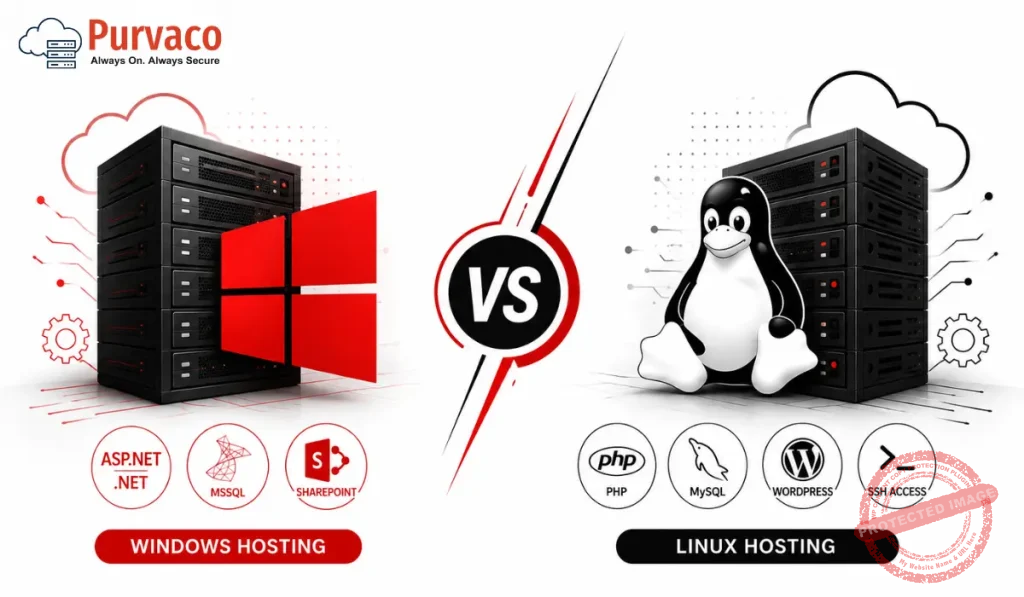
Imagine you are launching your first website. You have your domain name ready, your content is written, and you are very much excited to start. But then you open a hosting provider’s website and you see two options which are Windows Hosting and Linux Hosting. What is the difference? Which one should you choose? Will the wrong choice affect your website? Do not worry. You are not alone. Thousands of beginners face this exact confusion every single day. And the good news is this choice is not as complicated as it sounds. By the end of this guide, you will know exactly which hosting type is right for your website, your budget, and your goals. Whether you are starting a blog, building a business website, launching an online store, or developing a web application this guide will help you make a smart, confident decision. Let us dive in. What is Web Hosting? Before we compare Windows hosting vs Linux hosting, let us quickly understand what web hosting actually means. Web hosting is a service that lets you store your website files on a powerful computer which is called a server. This server is always connected to the internet, which means anyone in the world can visit your website anytime. To easily understand, think like this way- your website is like a house, and web hosting is the land it sits on. Without hosting, your website has no place to live on the internet. Now, as houses can be built on different types of land, your website can also be hosted on servers running different operating systems. The two most common options in the hosting industry are Windows Server and Linux Server. What is Windows Hosting? Windows Hosting means that your website files are stored on a server that runs Microsoft’s Windows Server operating system. Windows hosting is developed and maintained by Microsoft. It uses proprietary software that is why it typically costs more than Linux hosting. Hosting companies need to pay Microsoft for a Windows Server license and they pass that cost on to their customers. Windows hosting is the best option if your website or application uses Microsoft related technologies. For example, if you are building a web app using ASP.NET, running a Microsoft SQL Server (MSSQL) database, or using technologies like Microsoft Access then Windows hosting for ASP.NET is the right choice for you. What is Linux Hosting? Linux Hosting means that your website files are stored on a server running the Linux operating system. Linux is a free, open-source operating system which means that it is developed and maintained by a global community of developers and is available without any licensing fees. This is one of the main reasons Linux hosting is more affordable than Windows hosting. Hosting providers do not have to pay for the Linux operating system so that they can offer lower prices to their customers. Linux also comes in different versions called distributions. The most popular ones used in web hosting are Ubuntu, CentOS, and Debian. All of these are reliable, secure, and widely used by millions of websites around the world. Linux hosting is the most popular type of hosting in the world. In fact, the majority of websites on the internet run on Linux servers. It has become the industry standard for web hosting, and it powers everything from personal blogs to massive eCommerce websites. Linux hosting works great with technologies like PHP, Python, Ruby, Perl, and MySQL which are the building blocks of most popular web platforms such as WordPress, Joomla, Drupal, Laravel etc. Core Difference Between Windows Hosting and Linux Hosting Refer to this easy to read comparison table that summarizes the key differences between Windows and Linux hosting easily. Feature Windows Hosting Linux Hosting Operating System Windows Server Linux (Ubuntu, CentOS, Debian) Technology Support ASP.NET, .NET Core, MSSQL PHP, Python, Ruby, MySQL Cost Higher (licensing fees) Lower (open-source OS) Control Panel Plesk (common) cPanel (most popular) WordPress Support Works but not ideal Best choice for WordPress Performance Good for Windows apps Excellent for web hosting Security More targeted by attackers Highly secure, fewer risks Uptime / Stability Very good Excellent – industry standard File System NTFS (case-insensitive) EXT4 (case-sensitive) Remote Access RDP (Remote Desktop) SSH (Secure Shell) Best For ASP.NET, SharePoint, MS apps WordPress, PHP apps, blogs This table gives you a broad view of the hosting comparison. Now let us go deeper into each area so you can understand what these differences actually mean. Supported Technologies (Most Important Section) This is probably the single most important factor when choosing between Windows hosting and Linux hosting. The technology your website uses must match your server environment. Using the wrong hosting type is something like trying to run a Mac program on a Windows computer which is definitely not workable. Technologies Supported by Linux Hosting Linux hosting supports the following technologies natively and efficiently: • PHP – It is the most widely used server side scripting language for websites • Python – It is popular for web apps, machine learning projects, and Django frameworks • Ruby – It is used in Ruby on Rails web development • Perl – It is used for older web scripts and CGI applications • MySQL and MariaDB – It is the most popular open-source database systems • .htaccess files – It is a powerful configuration tool for URLs, redirects, and security Most of the world’s most popular web platforms such as WordPress, WooCommerce, Joomla, Drupal, Magento, and Laravel are built on PHP and MySQL. This means they run naturally on Linux hosting. If you want the best hosting for WordPress, Linux hosting is always the correct answer. Technologies Supported by Windows Hosting Windows hosting, on the other hand, supports these Microsoft specific technologies: • ASP.NET and ASP.NET Core • C# and VB.NET – popular programming languages in the